
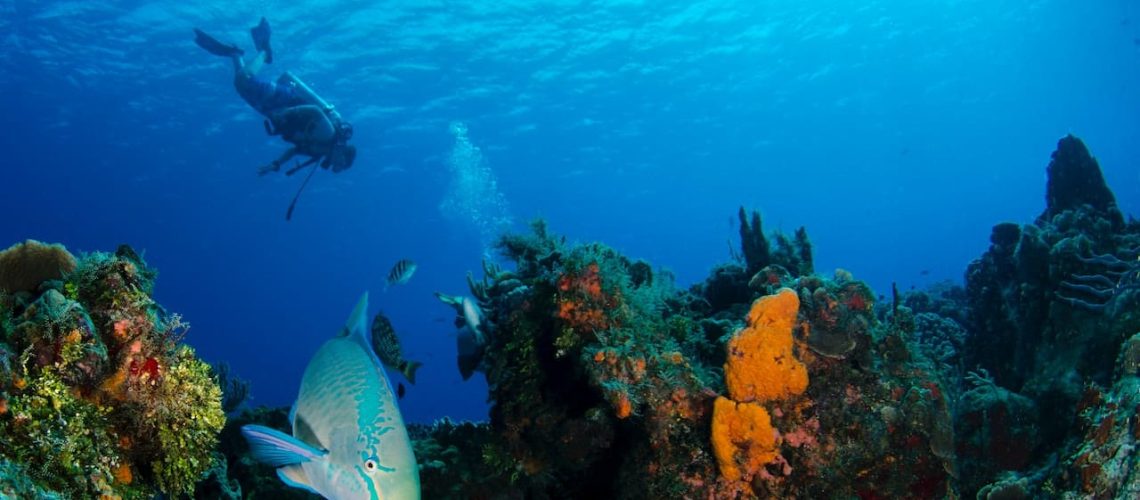
Roatan is a beautiful island in the Caribbean Sea that offers some of the best scuba diving experiences in the world. The island is known for its crystal-clear waters and diverse marine life, making it a perfect spot for underwater exploration. Here are ten common Caribbean reef fish that you can spot while scuba diving in Roatan.
Caribbean Blue Tang
Acanthurus coeruleus
The blue tang is a vibrant fish that is easily recognized by its bright blue color and yellow tail. These fish are commonly found swimming in groups around the reefs and can grow up to 12 inches in length.
| Depth 10-40 ft | Likelihood [★★★] | Best Time Year-round |
| Where to look: | All over the shallow reef — around coral heads and near structures such as the Overhead, Hole in the Wall, Moonlight, and Lighthouse dive sites | |
| Behavior: | schooling | Typically found in schools, grazing as they move from one coral head to another | |
| Pro tip: | Great for photography! They're not easily spooked, so you can often get quite close for a good shot. | |
Queen Angel Fish
Holacanthus ciliaris
The queen angelfish is a stunning fish that is often seen swimming in pairs or small groups. They have bright blue and yellow bodies with a striking crown-shaped pattern on their heads. These fish can grow up to 18 inches in length.
| Depth 10-60 ft | Likelihood [★★★] | Best Time Year-round |
| Where to look: | Near large coral formations, sponges, and reef walls — often seen alone or in pairs. If you see a green sea turtle eating a sponge, you'll likely see some Angelfishes around waiting to grab the scraps | |
| Behavior: | benthic | Generally solitary or in pairs. They feed mainly on sponges and sometimes on algae or small invertebrates | |
| Pro tip: | Their vibrant blue and yellow colors make them a favorite for photographers — approach slowly for the best shot, as they can be shy. Called "Queen" because of the spot on their forehead resembling a crown | |
| Conservation: | Not considered threatened, but healthy coral reefs are essential for their survival | |
French Angel Fish
Pomacanthus paru
The French angelfish is another beautiful fish that is commonly found in Roatan. They have a black body with yellow and blue accents, making them easy to spot. These fish can grow up to 24 inches in length.
| Depth 10-60 ft | Likelihood [★★★] | Best Time Year-round |
| Where to look: | Around coral heads, reef slopes, and sponges — frequently seen in pairs | |
| Behavior: | benthic | Usually found in bonded pairs. They feed mainly on sponges, algae, and small invertebrates. Called "French" because of their vibrant yellow pattern resembling champagne bubbles | |
| Pro tip: | They're curious and relatively approachable — move slowly and you can often get very close for a great photo. Their bold yellow-and-black pattern stands out beautifully against the reef | |
| Conservation: | Populations are stable, but like all reef fish, they rely on healthy coral ecosystems | |
Blue Striped Grunt
Haemulon sciurus
Grunts are small, silver fish that can be found in large schools around the reefs. They are known for their distinctive grunting noise that they make which is caused by grinding their teeth. Grunts can grow up to 12 inches in length.
| Depth Below 30 ft | Likelihood [★★★] | Best Time Year-round |
| Where to look: | West End Wall, Pablo's, Fish Den | |
| Behavior: | schooling | Often found schooling in large groups in the shallows during the day. They rest closely together near coral heads or under ledges, creating a mesmerizing wall of color and motion | |
| Pro tip: | Their bright yellow and blue stripes serve to confuse predators — when they move together, it's nearly impossible to pick out a single fish. The way their colors shimmer and reflect sunlight makes for stunning video footage! | |
Yellowtail Snapper
Ocyurus chrysurus
The yellowtail snapper is a popular fish that is commonly found around the reefs. They have a silver body with a yellow tail and can grow up to 24 inches in length.
| Depth 10-100 ft | Likelihood [★★] | Best Time Year-round |
| Where to look: | Frequently seen near reef edges, channels, and around wrecks — popular dive sites include West End Wall and Pablo's | |
| Behavior: | schooling | Typically found in large schools, they are fast swimmers and feed mainly on small fish, crustaceans, and plankton. More active during dawn and dusk | |
| Pro tip: | Their bright yellow tail makes them easy to spot. Approach slowly to get close for photos, especially when they're schooling | |
| Conservation: | Common and widespread, but local populations can be affected by overfishing. Support sustainable fishing to help maintain healthy stocks | |
Barracuda
Sphyraena barracuda
Barracudas are sleek and powerful fish that can be found swimming alone or in small groups. They have long, silver bodies with sharp teeth and can grow up to 6 feet in length.
| Depth 10-100 ft | Likelihood [★★] | Best Time Year-round |
| Where to look: | Frequently spotted near reef edges, drop-offs, and around wrecks. You can spot them around the Aguila, Half Moon Bay Wall or West End Wall | |
| Behavior: | pelagic | Known for their sleek, elongated bodies and sharp teeth, barracudas are opportunistic predators that hunt small fish and squid. They often patrol alone and can appear curious but usually keep their distance | |
| Pro tip: | Stay calm if one approaches — they rarely pose a threat to divers. Their silvery bodies reflect light and make for dramatic underwater photos, especially when hunting or cruising near the reef | |
Parrot Fish
Sparisoma viride
Parrotfish are colorful fish that are known for their unique beak-like mouths. They use these beaks to scrape algae off the coral reefs. These fish can grow up to 20 inches in length.
| Depth 10-80 ft | Likelihood [★★★★] | Best Time Year-round (day) |
| Where to look: | All over the reef — especially around coral heads where they feed, or near sandy patches where they rest at night. Look for them in groups or pairs cruising the reef | |
| Behavior: | benthic | Active grazers that spend most of the day scraping algae from coral and rocks with their beak-like teeth. They play a crucial role in keeping reefs healthy and even create sand as they grind coral. Only active during the day | |
| Pro tip: | Their vivid colors — especially in terminal males — make them stunning photo subjects. Approach slowly, as they can be skittish, and try to capture them mid-bite for an action shot! | |
| Conservation: | Vital to reef ecosystems but often overfished in some areas | |
Grouper
Mycteroperca spp
Groupers are large, slow-moving fish that can be found hiding in the reefs. They have a round body with a large mouth and can grow up to 8 feet in length.
| Depth 30-100 ft | Likelihood [★★★] | Best Time Year-round |
| Where to look: | Along the edge of walls and drop-offs — especially at Melissa's Reef, Half Moon Bay Wall, and the Aguila wreck | |
| Behavior: | benthic | Most groupers begin life as females and later transition into males as they mature. In early spring, they often migrate to specific sites for spawning. Groupers are typically solitary and territorial, but can be surprisingly curious around divers | |
| Pro tip: | If you spot a grouper resting with its mouth open, approach slowly and look closely — you might see small cleaner fish inside, removing parasites from its mouth and skin. It's an amazing natural interaction to witness! | |
| Conservation: | Particularly vulnerable during spawning season. Many species are protected and listed as "Do Not Eat" by the Roatan Marine Park. Avoid disturbing them to help their populations recover | |
Triggerfish
Balistes vetula
Triggerfish are small, colorful fish that are known for their unique dorsal fins. They have vibrant blue and yellow bodies with a distinctive pattern on their fins. These fish can grow up to 12 inches in length.
| Depth 20-100 ft | Likelihood [★] | Best Time Year-round |
| Where to look: | Popular spots include West End Wall, Hole in the Wall, Lighthouse Reef | |
| Behavior: | benthic | Known for their bold colors and their pointed dorsal spine that can be raised and locked into position to deter larger fish from attacking. They use strong jaws to crush sea urchins, crustaceans, and mollusks. Often seen swimming alone or in pairs | |
| Pro tip: | Their vivid blue and yellow patterns make them excellent subjects for underwater photography | |
| Conservation: | Populations are stable but rely on healthy reef ecosystems. Protecting reef habitats helps maintain their numbers and natural behaviors | |
Lion Fish
Pterois volitans
Lionfish are a non-native species that have become an invasive species in the Caribbean. They have a striking appearance with red and white stripes and long, venomous spines. Although beautiful, lionfish are harmful to the ecosystem. There are programs currently in place to encourage hunting and eating this fish.
| Depth 20+ ft | Likelihood [★★] | Best Time Year-round |
| Where to look: | In cracks and along reef walls | |
| Behavior: | cryptic | Generally calm and easy to approach, which makes them relatively simple to spear. However, be cautious — lionfish that have been targeted before may react to the sound of bubbles and become more wary | |
| Pro tip: | Handle with extreme care — lionfish are venomous! They're stunning to look at but pose a real danger to both divers and the reef ecosystem | |
| Conservation: | Participate in the RMP program to obtain a license to spear them and help control this invasive species | |
Honeycomb Cowfish
Acanthostracion polygonius
The honeycomb cowfish is a fascinating boxfish with a distinctive hexagonal pattern covering its armored body. Two horn-like spines protrude above the eyes, giving it its “cowfish” name. This unique species can reach up to 20 inches in length, though typically observed around 10 inches.
| Depth 10-80 ft | Likelihood [★] | Best Time Year-round |
| Where to look: | Clear waters around coral reefs — they prefer areas with good visibility where their camouflage is most effective | |
| Behavior: | benthic | Usually solitary, occasionally in small groups. They swim using their fan-like tail in a hovering manner. Shy and will quickly swim away when approached | |
| Pro tip: | Uncommon and cautious — consider yourself lucky to spot one! Their honeycomb pattern provides excellent camouflage. When stressed, they can brighten colors dramatically. Move slowly to observe longer | |
| Conservation: | Collected for aquarium trade. Observe from respectful distance to avoid stressing these uncommon reef residents | |
Batwing Coral Crab
Carpilius corallinus
The batwing coral crab is the largest crab species in the Caribbean, with a smooth, heavy carapace that can reach up to 6 inches across. Its pale to brick-red coloration features scarlet spots and meandering lines of small white or yellow spots, creating a stunning pattern.
| Depth 3-45 ft | Likelihood [★] | Best Time Night dives |
| Where to look: | Hiding under rocks and in reef crevices during the day. Look in recesses and under coral overhangs, especially on night dives when they forage | |
| Behavior: | cryptic | Nocturnal species that hide during day and forage at night. Feed on crustaceans and mollusks. Wary of divers and will use pinching claws defensively if cornered | |
| Pro tip: | Night diving offers best chance to observe these beautiful crabs foraging. During day dives, check under ledges but be careful where you place hands. Vibrant coloration worth the search! | |
| Conservation: | Not threatened. Habitat protection important for maintaining healthy populations of this striking species | |
Hogfish
Lachnolaimus maximus
The hogfish is the largest wrasse in the Western Atlantic, with a distinctive elongated snout and colors that change dramatically through different life stages. They can reach up to 3 feet in length, though typically seen around 1-2 feet. Named for the way they root around in the sandy sea floor with their pointed snout.
| Depth 10-100 ft | Likelihood [★★] | Best Time Year-round |
| Where to look: | Sandy margins of reefs, areas with sea fans (gorgonians), and seagrass beds. Larger individuals on main reef, juveniles prefer patch reefs | |
| Behavior: | benthic | Protogynous hermaphrodites (females change to males). Use pointed snout to root through sand for mollusks, crabs, and sea urchins. Small groups of one male and several females. Bright red irises distinctive | |
| Pro tip: | Watch for unique foraging as they shove snout into sand. Terminal phase males display stunning pink and salmon coloration with dark bar on snout. Approach slowly as they can be wary | |
| Conservation: | IUCN Vulnerable. Subject to fishing pressure throughout range. Support sustainable fishing practices and marine protected areas | |
Spotted Scorpionfish
Scorpaena plumieri
The spotted scorpionfish is one of the largest and most common scorpionfish in the Caribbean. Masters of camouflage with fleshy plumes over their eyes and mottled brown coloring, they blend seamlessly into rocky bottoms and coral. These fish can grow up to 18 inches in length.
| Depth 5-50 ft | Likelihood [★★] | Best Time Year-round |
| Where to look: | Lying motionless on coral and rocky bottoms, especially in areas with good camouflage. Check carefully around ledges and reef structures | |
| Behavior: | cryptic | Ambush predators that remain motionless for long periods, camouflaged against substrate. Feed on fish and crustaceans using large mouth to create suction. White spots on pectoral fins (visible only when threatened) | |
| Pro tip: | Extremely well-camouflaged — scan bottom carefully during safety stops and shallow dives. NEVER touch reef or place hands without looking first. Venomous dorsal spines cause severe pain requiring medical attention | |
| Conservation: | Populations stable but vulnerable to habitat degradation. Practice good buoyancy control and careful hand placement | |
Caribbean Reef Squid
Sepioteuthis sepioidea
The Caribbean reef squid is the only squid species commonly encountered by divers over inshore reefs in the Caribbean. With torpedo-shaped bodies and fins extending nearly their full length, adults reach 6-12 inches in mantle length. They’re known for their remarkable color-changing abilities used for communication and camouflage.
| Depth 0-60 ft | Likelihood [★★] | Best Time Breeding season |
| Where to look: | Shallow areas near reefs, often in small schools of 4-30 individuals. Look for them hovering in water column above reef structures | |
| Behavior: | pelagic/schooling | Highly visual and social creatures communicating through rapid color changes. Point bodies vertically before striking prey, curl upward during territorial disputes. Feed on small fish and crustaceans. Often curious about divers | |
| Pro tip: | Move slowly and avoid sudden movements — these squid are often curious and may approach to investigate! Color-changing displays fascinating to photograph. Best opportunities typically morning and late afternoon | |
| Conservation: | Populations stable but semelparous (die after reproducing once). Important prey species for larger reef predators | |
Caribbean Reef Shark
Carcharhinus perezi
The Caribbean reef shark is the most commonly encountered shark species on Roatan’s reefs. With a robust, streamlined body reaching up to 10 feet (typically 6-7 feet), this apex predator plays a crucial role in maintaining reef health. These sharks are often seen during organized shark dives in Roatan.
These are just a few of the common Caribbean reef fish that you can spot while scuba diving in Roatan. With its diverse marine life and crystal-clear waters, Roatan is a paradise for underwater explorers. For some of the best and most economical scuba diving in the world, a visit to Roatan and diving with Octopus Dive School is a must!